Diabetic Retinopathy
What Is Diabetic Retinopathy?
People with diabetes can have an eye disease called diabetic retinopathy. This is when high blood sugar levels cause damage to blood vessels in the retina. These blood vessels can swell and leak. Or they can close, stopping blood from passing through. Sometimes abnormal new blood vessels grow on the retina. All of these changes can steal your vision.
Stages of Diabetic Eye Disease
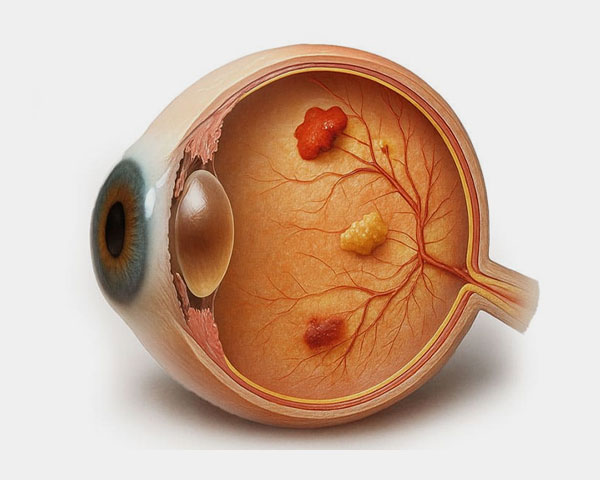
PDR (proliferative diabetic retinopathy)
It happens when the retina starts growing new blood vessels. This is called neovascularization. These fragile new vessels often bleed into the vitreous. If they only bleed a little, you might see a few dark floaters. If they bleed a lot, it might block all vision. These new blood vessels can form scar tissue. Scar tissue can cause problems with the macula or lead to a detached retina. PDR is very serious, and can steal both your central and peripheral (side) vision.
Diabetic Retinopathy Symptoms
- Seeing an increasing number of floaters,
- Having cblurry vision,
- Having vision that changes sometimes from blurry to clear,
- Having poor night vision, and
- Seeing blank or dark areas in your field of vision,
- Noticing colors appear faded or washed out losing vision
Credit: American Ophthalmology Association
Written By: Kierstan Boyd
Reviewed By: G Atma Vemulakonda, MD
Dec. 04, 2018